Do All Basements Require Egress Window Installation?
If you’re planning a basement upgrade or trying to understand requirements, conflicting information around safety and code can quickly lead you in the wrong direction. So, do all basements require an egress window? The short answer is no, not every basement needs one. However, the answer isn’t always so cut-and-dry. Egress window requirements in St. Louis depend on how the space is used, particularly whether it’s intended for living or sleeping. Once a basement shifts from storage to a habitable area, the rules change. Let’s take a closer look at when egress windows are actually required and why they matter.
Why Are Egress Windows Sometimes Required for a Basement?
Egress windows are sometimes required in basements because they serve a critical safety function. They provide a way to escape in an emergency and allow first responders to enter and exit, if needed.
Building codes focus less on the basement itself and more on how the space is used. That’s why the rules change based on whether the basement is unfinished storage or converted into a habitable living area.
A habitable living area is a space designed for regular, everyday use—where activities like living, sleeping, eating, or cooking take place. When people spend significant time in a basement, additional safety measures come into play.
In those cases, the space typically must meet standards for ceiling height, room size, natural light, ventilation, and safe exits to be considered suitable for ongoing occupancy. An egress window can help meet several of these requirements at once.
When Egress Windows Are Required for St. Louis Basements
In St. Louis, egress window requirements are tied directly to how your basement is used, especially when the space is intended for living or sleeping. Local codes generally follow the International Residential Code (IRC), which requires a safe means of escape in any habitable area below grade.
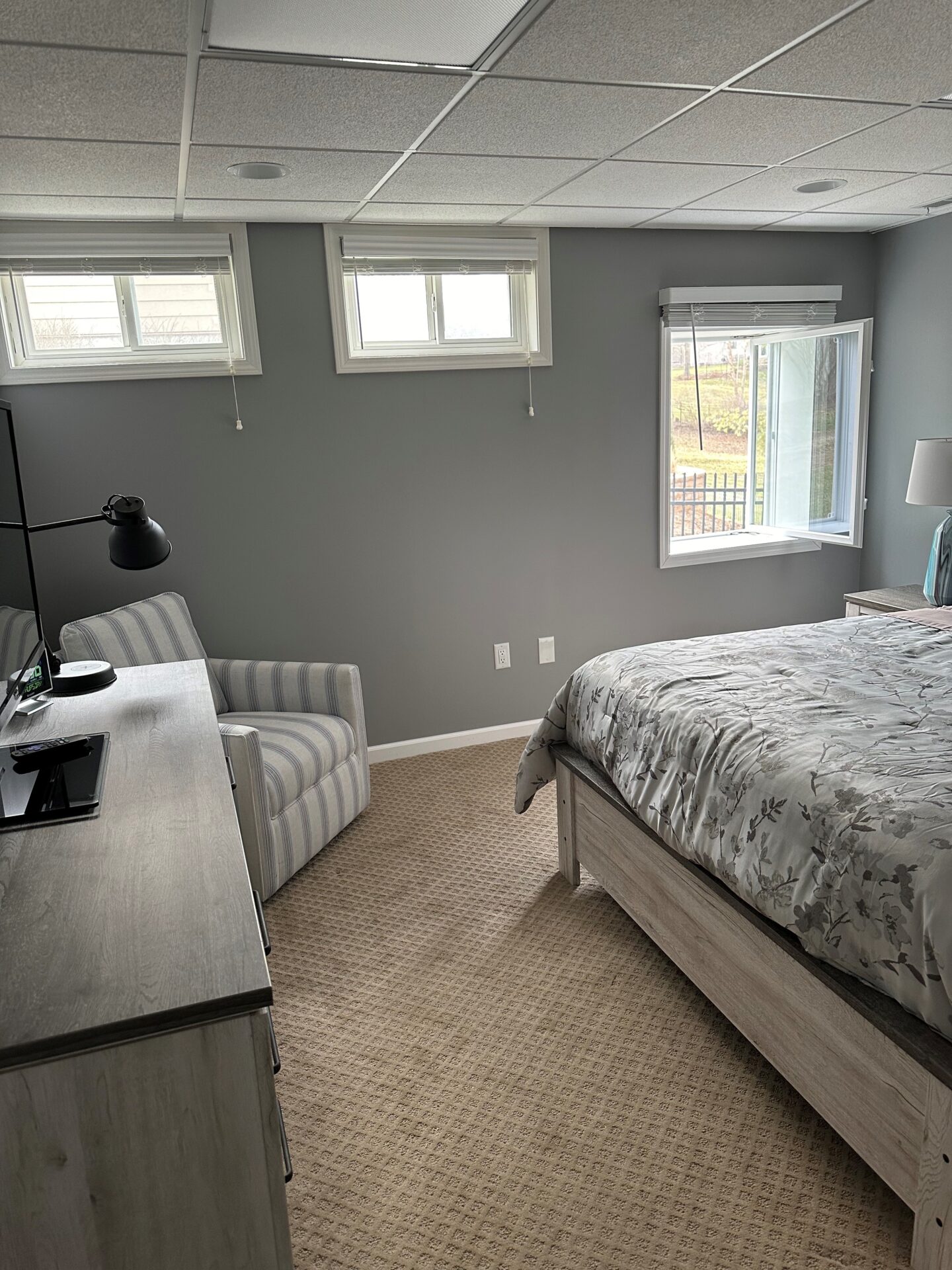
If your basement includes a bedroom, an egress window is required, with no exceptions. The same applies to finished basements designed for everyday living, such as family rooms, guest suites, or other regularly occupied spaces.
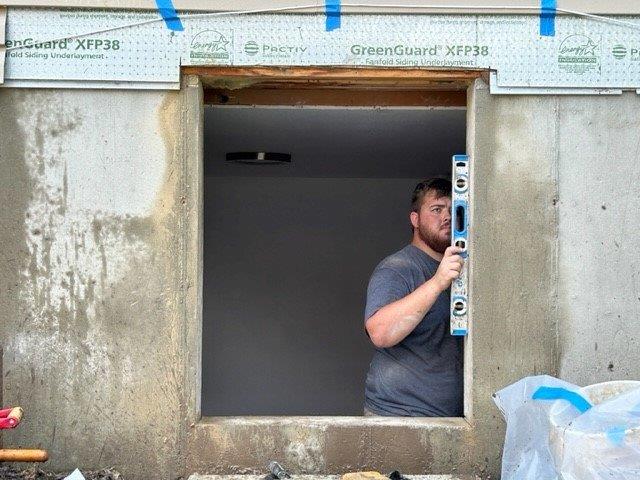
Even if you’re renovating an existing basement, these changes could warrant an egress window. Adding usable square footage means the space has transformed from storage to a habitable quarter.
At a minimum, there must be at least one fully compliant egress opening that allows occupants to exit safely and provides access for emergency responders.
When Egress Windows Are Not Required in St. Louis Properties
Egress windows are typically not required in basements that are not intended for living or sleeping. In St. Louis properties, this generally applies to unfinished basements used strictly for storage.
The same is true for utility or mechanical areas housing appliances, such as furnaces, water heaters, or electrical systems. If the basement is not set up as a livable environment and isn’t used for day-to-day activities, egress requirements usually do not apply.
Storage and utility spaces rarely present emergency situations requiring people to enter and exit the basement quickly. Conversely, if a person sleeps in a basement, they need a way to get out safely in case of a fire, while emergency responders need a way to get inside to prevent further catastrophes or save a life.
Why Egress Window Requirements Exist
In an emergency, a basement can quickly go from a comfortable living space to a confined, high-risk area with limited ways out. These requirements are in place to improve safety in below-grade environments by ensuring there is a clear, accessible escape route. A properly sized window provides a reliable exit when stairs or primary pathways are blocked.
They also allow firefighters and other first responders to enter the space quickly when needed. That dual purpose is what makes this feature a critical part of residential building codes. While enforced through regulation, it serves a very real safety function and is not just a formality.
St.Louis Building Codes: Things to Know
As we’ve mentioned, basement egress requirements are largely based on the International Residential Code (IRC). The IRC establishes minimum safety standards for residential construction. Under these guidelines, any basement containing a habitable space must have at least one emergency escape and rescue opening, such as an egress window or an exterior door.
To meet code requirements, egress windows must typically provide:
- A minimum net clear opening of 5.7 square feet (5.0 square feet for grade-floor openings)
- A minimum clear opening height of 24 inches
- A minimum clear opening width of 20 inches
- A sill height no more than 44 inches above the finished floor
- At the exterior, no overhead obstructions (think deck or bay window) within 36” of the window well
If the window is below grade, a window well is required. In addition, larger wells may need a permanently affixed ladder or steps for safe escape.
While St. Louis jurisdictions generally follow IRC standards, local codes and enforcement practices can vary slightly between municipalities and counties. Homeowners should always verify specific requirements with their local building department and obtain any necessary permits before beginning a basement finishing or remodeling project.
Common Misunderstandings About Egress Windows
There are a few common misconceptions that can lead to confusion about egress requirements. One of the biggest is the assumption that any basement window will qualify. In reality, the window must meet specific size and accessibility standards to count as a legal escape route.
Another myth is the belief that older homes are automatically exempt. While that can sometimes be true for historic St. Louis homes, those exemptions often disappear once renovations or conversions are made.
It’s also easy to think egress windows are only important for resale value, but their primary purpose is safety and code compliance. These requirements are in place to protect occupants and ensure emergency access. Therefore, egress windows are an essential consideration well before a home ever goes on the market.
Quick Decision Guide: Do I Need an Egress Window for My Basement?
If you’re unsure whether your basement needs an egress window, a few key questions can help point you in the right direction. The answer usually comes down to how the space is used and whether it qualifies as a livable area under code.
Here’s a quick way to assess your situation:
- Are you adding or using a bedroom? → Yes, you need an egress window
- Is the basement finished for a living space? → Likely yes
- Is it purely storage or utility? → Probably not required
If you’re still unsure how these guidelines apply to your home, it’s worth getting a professional perspective. Basement layouts, local codes, and renovation plans can all influence what’s required. Our team at Stratum Structural Systems can help you evaluate your space and determine the right next steps with confidence.
Egress Windows Installation in St. Louis County
Not every basement in St. Louis County requires an egress window, but the moment a space is used for living or sleeping, that requirement typically applies. Understanding how your basement is classified is key to staying compliant and ensuring the space is safe for everyday use.
Since local codes and enforcement can vary, it’s always a good idea to verify requirements before making any changes or starting a renovation. If you’re unsure what applies to your home, our team at Stratum Structural Systems can help you navigate the process and make informed decisions with confidence. Contact us today!