Why Piering Foundations Can Help with Settlement Issues

Few things are more unsettling for homeowners than discovering the dreaded signs of foundation settlement. Widening cracks, sticking doors, or sloping floors can all hint at hidden risks beneath the surface. This concern is especially urgent for those living in St. Louis County, St. Charles County, and St. Clair, Madison and Monroe Counties in Illinois where this year’s severe drought has left soils unusually dry and unstable, dramatically increasing the likelihood of foundation movement and structural damage. While minor settlement is common as homes age, large or rapid movement calls for immediate professional attention to prevent escalating issues. Foundation piering is a time-tested solution that offers proven results by stabilizing and lifting settled areas. Here’s why you should consider piering for foundation settlement of your St. Louis home.
What is Foundation Settlement and Why Is It A Problem?
Foundation settlement occurs when the concrete foundation under a house begins sinking lower than where it was originally built. When this happens, parts of the foundation walls start to crack and shift further into the ground. Eventually, the foundation will no longer be in its proper position to support the house, and that can be a big problem.
As the foundation loses its support, it can settle unevenly, creating gaps or stress points that threaten the stability of the entire building. Homeowners may first notice warning signs like cracks forming in walls or ceilings, doors and windows that suddenly stick, or floors that have started to slope or feel uneven underfoot.
These symptoms may appear mild but can quickly worsen if the underlying settlement isn’t stopped. Not addressing the issue can cause further structural damage, water leaks, and even loss of property value.
Common causes of settlement include:
- Expanding and contracting clay soils
- Periods of extreme wet or extreme dry weather
- Improper ground site preparation
- Tree roots near the foundation drawing moisture from the surrounding earth
- Plumbing leaks that lead to soil erosion under the slab
This year, the St. Louis metropolitan area faces an especially significant risk, as an unusually long drought has left local clay soils drier and less stable than normal. As the soil shrinks and pulls away from foundations, it increases the likelihood of homes shifting and settling unpredictably. With weather patterns putting extra pressure on already vulnerable foundations, it’s more important than ever for homeowners to recognize early signs of settlement and take action to protect their property and peace of mind.
Foundation Piering 101
Foundation piering is a reliable method used to stabilize and support a home’s foundation when it has settled or is at risk of settling further. The process begins with a thorough inspection by foundation experts to diagnose the areas where the foundation has lost support.
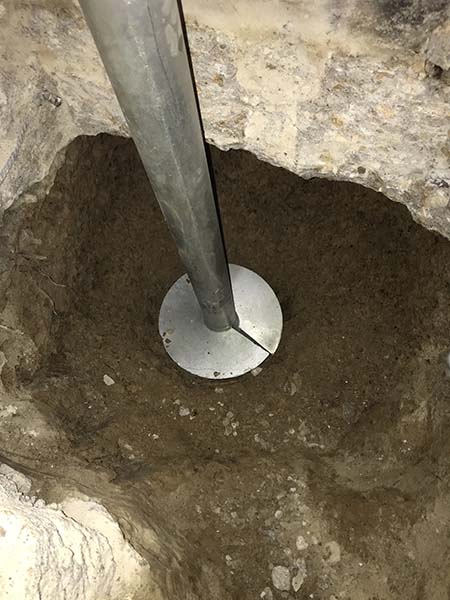
Then, small excavation areas are made near the walls to expose the foundation footing at the base. That’s where steel piers are carefully installed. They’re driven deep into load the bearing strata or bedrock to provide a solid, lasting foundation beneath the structure.
By resupporting a foundation to stable ground, piering directly addresses settlement issues by lifting and stabilizing sagging areas of the home. This method not only halts further sinking but can also restore the foundation to its original level, reducing cracks and preventing additional structural damage. In this way, foundation piering ensures long-term stability and protection for the home.
There are two main types of piers commonly used in foundation repair: steel push piers and helical piers.
Push Piers vs. Helical Piers
Push piers are hollow steel pipes that are hydraulically pushed into the ground until they reach firm soil, while helical piers resemble large screws that are twisted into the earth to bear the building’s load.
Both types transfer the foundation’s weight from unstable soil to a deeper, more secure layer. However, helical piers can be installed with minimal excavation and are suitable for tighter spaces. They can be utilized for light or heavy structures.
Push piers are limited to when the structure is heavy enough to drive the piers deep into the ground, but weight of the structure is crucial. Generally, these are not advisable for light loads because the piering equipment used to install the pier is physically attached to the structure and, in part, uses the weight of the structure to assist in its installation.
Conversely, Helical piers can be used for lighter or heavier loads because the piers are independently driven using hydraulic drive heads and do not rely on the weight of the structure for installation.
Benefits of Piering for Foundation Settlement Issues
When it comes to protecting a home, every owner wants a solution that truly stands the test of time. Foundation piering offers that reassuring, long-term fix. They actively prevent further movement and halt the advance of new cracks or structural shifts. This makes piering the ultimate solution for foundation settlement.
Once installed, piers anchor a home’s foundation into stable soil or bedrock, restoring structure and counteracting unpredictable soil conditions. This permanent support gives homeowners confidence that their property is protected by a time-tested method built to withstand even the most unpredictable ground and weather conditions.
One of the standout advantages of piering is how seamlessly it fits into a homeowner’s routine. Unlike sprawling excavation or disruptive repairs, piering relies on compact equipment and targeted installation.
This method allows work to be done with minimal impact on landscaping or daily life. Most projects are completed quickly and efficiently, leaving surrounding yards, gardens, and patios largely untouched. This lower footprint makes piering an appealing choice for those looking to preserve their property’s appearance while tackling foundation worries at their source.
Beyond foundational security, piering can offer a meaningful boost to property value and peace of mind. Homes with professionally stabilized foundations command higher prices, attract more buyers, and sidestep the stigma or headaches of unresolved foundation problems.
Knowing that a home will remain safe and sound in the face of future storms, droughts, or shifting soils gives real assurance both to current owners and anyone looking to buy!
How to Know If Piering for Foundation Settlement Is the Best Choice for My House?
Piering is most appropriate for homes experiencing significant foundation settlement. It’s especially useful in situations where structural integrity is threatened or when the underlying soil is unstable and cannot safely support the home through more basic methods, like concrete leveling, which should only be used on a slab of concrete such as driveways, patios or sidewalks.
If cracks are widening, floors are noticeably uneven, or previous repairs have failed, these might be signs to consider piering. Piering provides a permanent solution. This method shines in situations demanding more than cosmetic fixes, particularly when ongoing soil movement or water management issues are a concern.
It’s essential to have a qualified foundation specialist or structural engineer perform a thorough evaluation whenever persistent settlement signs appear. Their expertise ensures that the chosen repair method is tailored to the specific issues and soil conditions at each property.
Piering for Settling Foundation in St. Louis
When it comes to the stability and value of a home, choosing a lasting solution is essential. This year, St. Louis has experienced a heavy drought. Our region’s soil has tested the limits of so many foundations, especially on historic homes.
At Stratum Structural Systems, our experienced team understands just how much your home means to you and is committed to delivering repairs built to withstand whatever nature throws your way. With every project, we focus on lasting quality and honest guidance, so you can feel confident your foundation (and your investment) is protected for years to come! Contact us today.